How to Install Starlink on a Tile Roof in Orange County
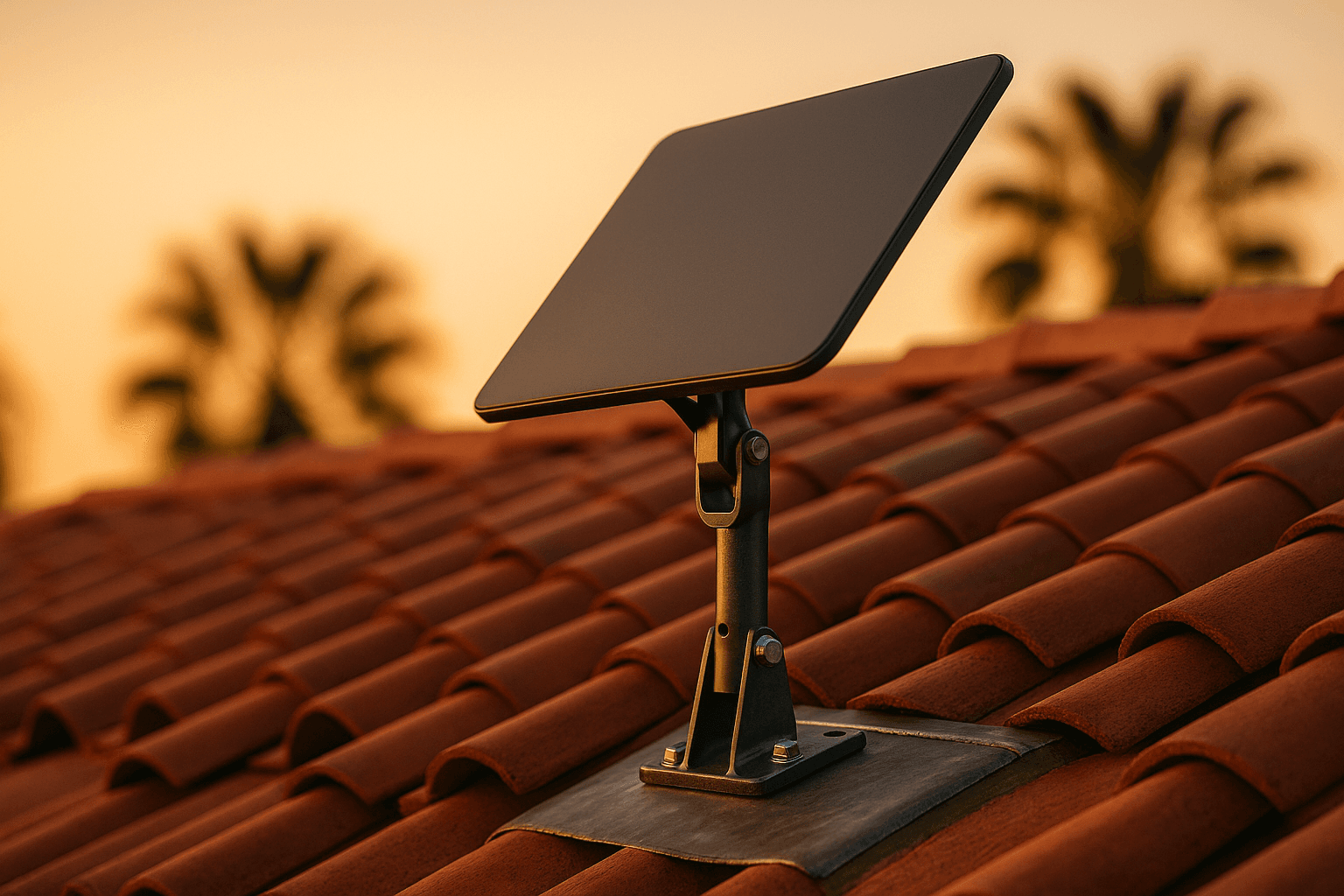
The short version: a professional Starlink install on a tile roof uses a tile hook that anchors to the batten or deck underneath the tile — the tile itself is never drilled, and the roof warranty stays intact. Tile-roof installs in Orange County start at around $799 and take about four hours. Here is the full walkthrough of how we do it, why it matters, and what to watch out for if you are hiring someone for the job.
Orange County has more tile roofs per capita than almost any other metro in the US. San Juan Capistrano, Anaheim Hills, Laguna Niguel, Mission Viejo, Yorba Linda, and most of the Mediterranean-style tracts throughout South County are tiled. Tile is gorgeous, long-lived, and fragile. Done right, it will outlast you. Done wrong, a single mis-drilled screw can crack a tile and start a leak that shows up a year later on your living room ceiling.
Tile Types You Will Find on OC Homes
| Tile Type | Where You See It | Install Notes |
|---|---|---|
| Clay barrel (S-tile) | San Juan Capistrano, older Anaheim Hills, historic districts | Brittle with age, lift carefully, use barrel-profile hook |
| Concrete S-tile | 1990s–2010s South County tracts | More forgiving than clay, hook or flashed tile replacement |
| Concrete flat tile | Newer Irvine, Rancho Mission Viejo, Talega | Closest to shingle in workflow, flashed flat-tile kit |
| Clay flat tile | High-end custom homes, parts of Newport Coast | Special-order replacement tiles if one breaks |
| Slate | Rare, some custom Laguna Beach homes | Hook-only, never drill, specialty hardware |
Identifying your tile type matters for the quote. Send us a photo of your roof — from the street or from an upstairs window looking down — and we can tell you in a minute what you have.
Why You Never Drill Through Tile
Three reasons, all non-negotiable:
- Tile cracks propagate. A drill bit, even a masonry bit, creates micro-fractures around the hole. Thermal cycling and foot traffic turn those micro-fractures into visible cracks over months or years.
- The seal will fail. Tile is not flat at the micro level. A sealant around a through-tile penetration has nothing clean to grip. Water finds its way in.
- It voids the roof warranty. Every tile manufacturer — Boral, Eagle, Redland, Monier — explicitly excludes through-tile penetrations from warranty coverage. One bad mount and you just dropped a 50-year warranty on a 20-year-old roof.
If you see a Starlink install with screws going straight through a tile, that job needs to be redone.
The Correct Methods
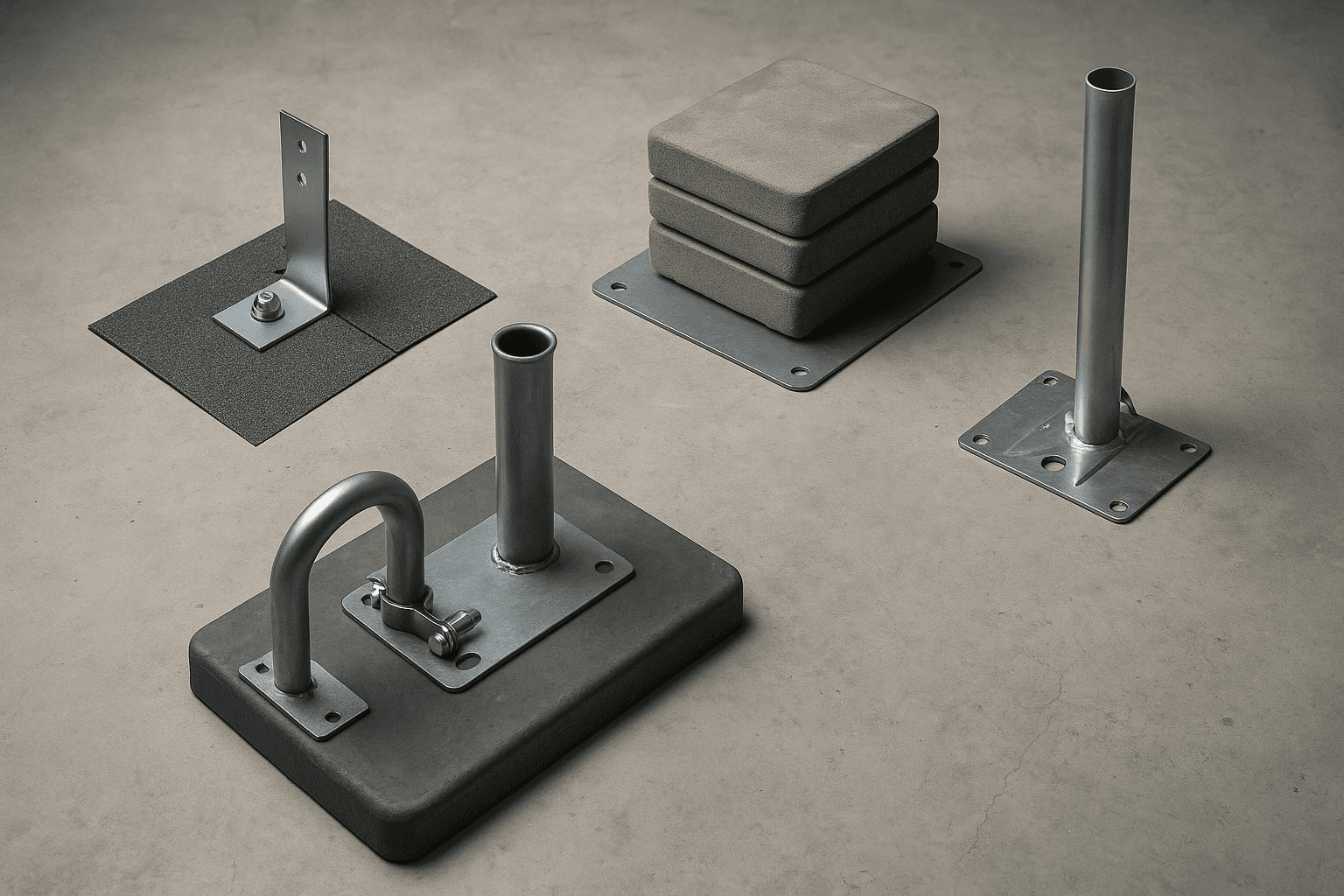
There are two correct ways to anchor a Starlink mount on a tile roof. Which one we pick depends on the tile type, the tile condition, and the mount load.
Method 1 — Tile Hook
A stainless steel or hot-dip galvanized hook that lag-bolts into a rafter or the batten board underneath the tile. The hook comes up and out between two courses of tile. The tile above sits back down over the shank of the hook. No tile is drilled. No tile is cut (on flat tile we sometimes kerf a small channel for clearance, but never a hole).
This is our go-to on:
- Concrete S-tile with good profile clearance
- Most clay barrel tile
- Concrete flat tile
Loads transfer through the hook into the rafter system, not into the tile. The tile serves its original job: shedding water.
Method 2 — Flashed Replacement Tile
We remove one tile, install a manufactured flashing kit (with its own sealed penetration) in its place, and set the Starlink mount on the flashing's integrated plate. The surrounding tiles lap over the flashing edges exactly like they would lap over an adjacent tile.
This is our go-to on:
- Flat concrete or clay tile when a hook would sit too proud
- Installations where the mount load is higher (commercial High Performance dish)
- Locations where the roofer originally left spare tiles (common on newer homes)
We source replacement tiles either from your stash (most homeowners have a small pile left by the roofer) or from a tile supplier. The color may not match perfectly on sun-faded roofs — we match as closely as we can.
The Install Walk-Through
Here is what a typical OC tile roof install looks like on the day:
- Roof approach. Foam walking pads, never bare shoes on clay. We walk the tile courses, not the tile peaks.
- Work area prep. Lift and stack tiles in the immediate work zone. Inspect the underlayment and batten. Flag any rot or damage (about 1 in 20 tile roofs has some under-tile issue that needs attention before we mount).
- Mount placement. Anchor the hook into a rafter or solid batten — not just into the sheathing. Torque to spec.
- Sealant and flashing. Sealant on the fastener heads, flashing where required.
- Cable run. Under-tile routing wherever possible. The cable tucks between courses, not across the surface. This protects the cable and keeps the roof looking clean from the street.
- Tile re-set. Replace the lifted tiles. Verify overlap. Verify water-shedding path is restored.
- Photo documentation. Before, during, and after photos for your records and for any future roofer who works on the roof.
- Speed test and cleanup. Ground-level speed test and a full sweep for any chipped tile fragments or debris.
HOA Considerations on Tile Roofs
A lot of OC tile-roofed tracts are also HOA-governed, which means the install is both a roof job and an architectural review job. The good news: tile hooks and flashed replacement tiles are the most HOA-friendly install methods because the dish can sit low behind a ridge and the tile roof looks undisturbed from the street.
We can provide the architectural committee with:
- A mount location photo with the proposed spot circled
- A product spec for the tile hook or flashing kit
- A cable routing plan
- A sight-line mockup from the street
For more on HOA submittals, see our HOA-friendly install guide.
Common Mistakes We Fix
Some of the tile-roof installs we fix as second-visits have the same mistakes over and over:
- Direct drill through the tile (always a leak, always a redo)
- Mount anchored to the sheathing instead of a rafter (loose within six months)
- Cable run across the top of the tile instead of under it (cable wear, aesthetic mess)
- Broken surrounding tiles left un-replaced (water intrusion point)
- No photo record of the work (customer cannot prove the roof warranty is still good)
If you had a Starlink installed on a tile roof and you are seeing any of those signs, we will come out for a look and quote a proper rework.
Ready to Book a Tile-Roof Install
Tile-roof installs in Orange County start at around $799. We schedule most installs within a week. Request a quote with a photo of your roof, or call (714) 474-5075 and we will walk through your tile type over the phone.